
Are you spending hours each week manually tracking your business's environmental metrics while wondering if you're truly meeting Hawaii's stringent sustainability requirements? You're not alone. Many Hawaii business owners find themselves caught between increasing environmental regulations, rising visitor expectations for eco-friendly practices, and the overwhelming task of tracking it all manually.
The good news? Sustainability analytics powered by modern business intelligence tools can automate this entire process, giving you real-time insights while ensuring compliance and demonstrating your commitment to malama 'aina (caring for the land) to environmentally conscious visitors.
The Growing Pressure on Hawaii Businesses
Hawaii businesses face unique environmental challenges. With tourism as our economic backbone and our islands' fragile ecosystems at stake, the pressure to operate sustainably has never been higher. Consider how a Waikiki hotel must track water usage, energy consumption, waste diversion rates, and carbon emissions—all while maintaining detailed records for county and state reporting requirements.
Meanwhile, today's visitors actively seek out businesses with verifiable sustainability credentials. According to recent reports from Sustainability Analytics and Business Intelligence in 2025, travelers increasingly make booking decisions based on a company's environmental performance, with many willing to pay premium prices for demonstrably sustainable options.
Manual tracking simply can't keep pace with these demands. Spreadsheets become outdated the moment you save them. Paper logs get lost or incomplete. And when audit time arrives, scrambling to compile months of data creates unnecessary stress and potential compliance gaps.
What Sustainability Analytics Actually Means for Your Business
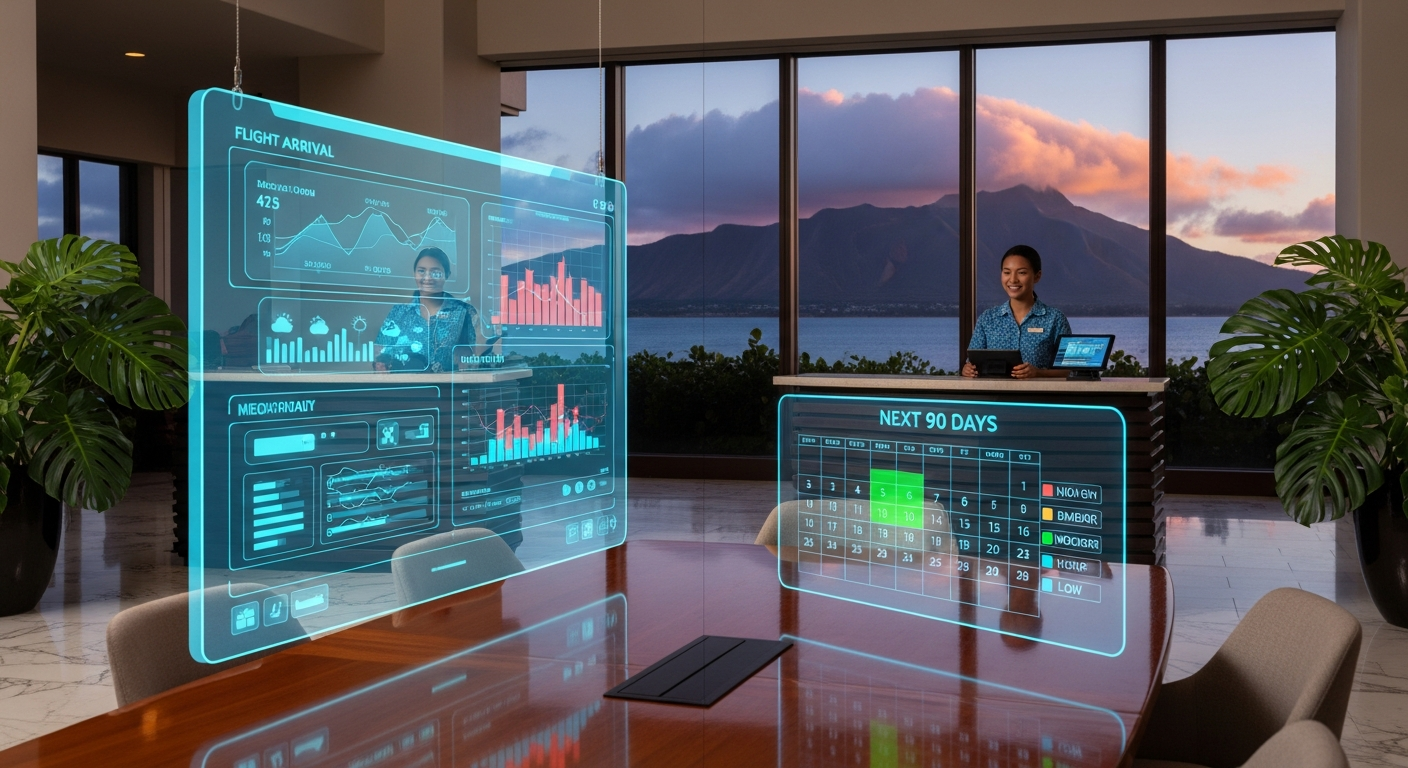
Sustainability analytics transforms raw environmental data into actionable insights through automated collection, analysis, and reporting. Think of it as having a dedicated environmental manager who never sleeps, constantly monitoring your operations and alerting you to both problems and opportunities.
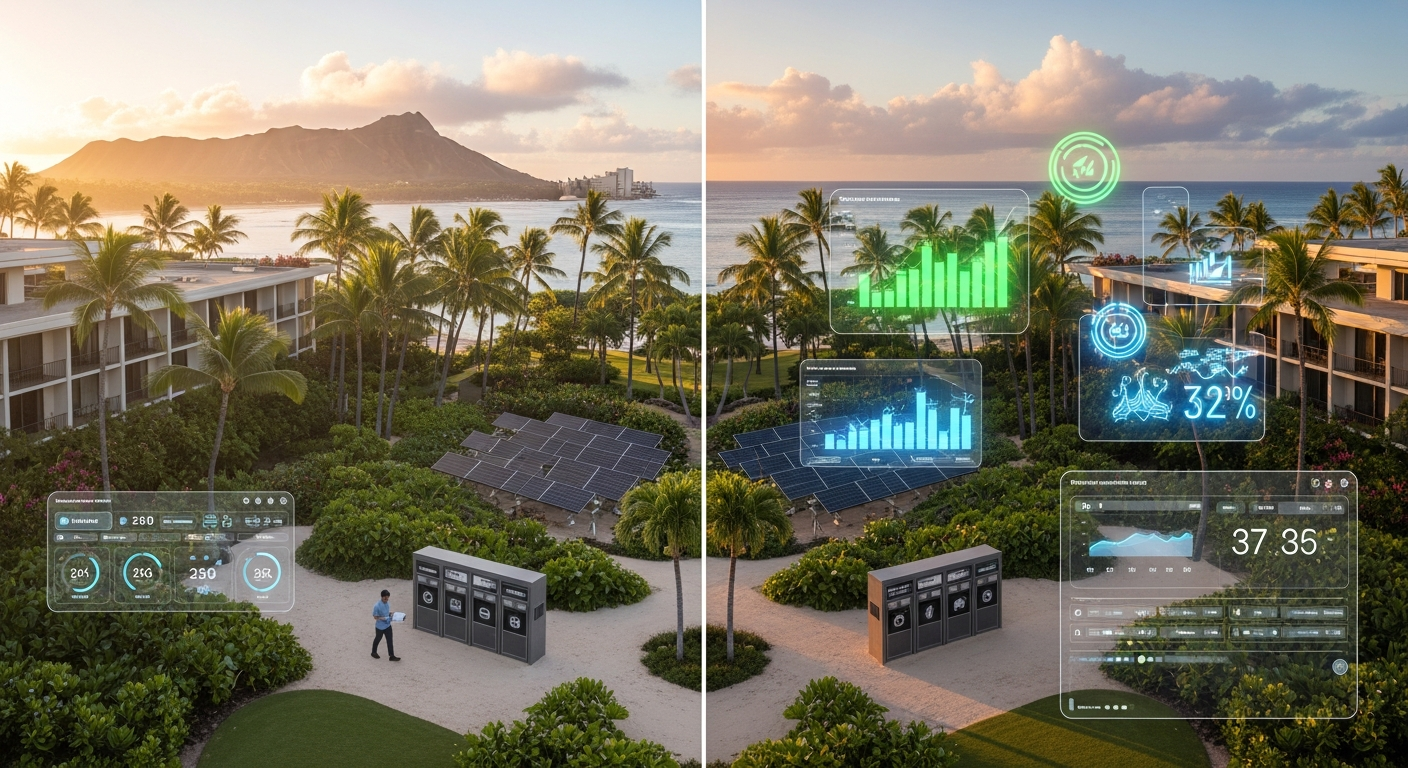
Here's what this looks like in practice: Imagine a Maui restaurant that wants to reduce its environmental footprint. Instead of manually weighing trash bags and recording utility bills, sensors and smart meters automatically capture data on food waste, water usage, electricity consumption, and refrigerant levels. This information flows into a centralized dashboard that shows real-time metrics, identifies trends, and flags anomalies.
The system might alert the restaurant that water usage spiked 30% on Tuesday afternoons—investigation reveals a leaking dishwasher that's been wasting thousands of gallons monthly. Or it might show that switching to a different supplier reduced packaging waste by 40%, providing concrete data to share with environmentally conscious diners.
Key Benefits of Automated Sustainability Tracking
Compliance Made Simple
Hawaii's environmental regulations continue to evolve, from plastic bag bans to renewable energy requirements to waste diversion mandates. Sustainability analytics platforms can be configured to track the specific metrics required for your industry and location, automatically generating compliance reports in the formats regulators expect.
When the County of Hawaii requests your quarterly waste diversion report, you're not frantically searching through files. Instead, you click a button and generate a comprehensive report showing exactly where your business stands. This automation reduces compliance risk while freeing your team to focus on actually improving environmental performance rather than just documenting it.
Cost Savings Through Efficiency
Environmental sustainability and financial sustainability often go hand in hand. By identifying inefficiencies in real-time, analytics platforms help you reduce waste and lower operating costs. Many Hawaii businesses discover that their investment in sustainability analytics pays for itself within months through reduced utility bills, optimized resource usage, and avoided waste disposal fees.
Consider how a tour operator could use analytics to optimize vehicle routing, reducing fuel consumption while also decreasing carbon emissions. Or how a retail store might discover that adjusting HVAC schedules based on actual occupancy patterns cuts energy costs by 20% while maintaining customer comfort.
Marketing Advantage with Verified Credentials
Today's consumers are skeptical of greenwashing—vague environmental claims without substantiation. Sustainability analytics provides the verified data you need to back up your environmental commitments. You can confidently share specific achievements: "We've reduced water consumption by 35% since 2023" or "Our operations are now carbon neutral, verified through continuous monitoring."
This transparency builds trust with environmentally conscious visitors and can become a significant competitive advantage. Hotels can display real-time sustainability metrics in lobbies. Restaurants can show diners exactly how much food waste they've diverted from landfills. Retail businesses can demonstrate their commitment to reducing packaging waste with concrete numbers.
How Business Intelligence Powers Sustainability Analytics
The connection between business intelligence and sustainability analytics runs deeper than you might think. Modern BI platforms don't just collect environmental data—they integrate it with your operational and financial information to provide holistic insights.
This integration reveals relationships you might otherwise miss. Perhaps your highest-revenue days also generate the most waste, suggesting opportunities to improve efficiency during peak periods. Or maybe your most popular product line has the largest environmental footprint, prompting a strategic discussion about sustainable alternatives or offset programs.
Advanced analytics can also predict future trends. Machine learning algorithms identify patterns in your historical data to forecast upcoming resource needs, helping you proactively adjust operations. If the system predicts increased energy demand next month based on booking patterns, you can implement efficiency measures before the spike occurs.
Implementing Sustainability Analytics: What Hawaii Businesses Need to Know
Start with Clear Objectives
Before implementing any system, identify what you actually need to track. Are you primarily concerned with regulatory compliance? Reducing costs? Marketing your environmental credentials? Different objectives require different approaches, and trying to track everything at once can lead to analysis paralysis.
Focus on the metrics that matter most for your industry and goals. A hotel might prioritize energy and water usage, while a restaurant focuses on food waste and packaging. A retail business might emphasize supply chain sustainability and product lifecycle impacts.
Choose the Right Technology Stack
Sustainability analytics solutions range from simple monitoring tools to comprehensive enterprise platforms. Your choice should match your business size, technical capabilities, and budget. Many Hawaii small businesses start with cloud-based solutions that require minimal upfront investment and can scale as needs grow.
Look for platforms that integrate with your existing systems—your POS, accounting software, and operational tools. The more seamlessly data flows between systems, the more valuable your insights become. Also consider solutions designed for Hawaii's specific regulatory environment, which can save significant customization time.
Ensure Data Quality and Consistency
Analytics are only as good as the data feeding them. Invest in reliable sensors and monitoring equipment, establish clear protocols for any manual data entry, and regularly audit your data for accuracy. Even automated systems require occasional calibration and validation.
Training your team on the importance of data quality pays dividends. When everyone understands how their actions affect the data and why accurate tracking matters, you'll get better insights and more meaningful results.
Real-World Applications Across Hawaii Industries
Hospitality and Tourism
Hotels and resorts can monitor energy consumption by building zone, track water usage per occupied room, measure waste diversion rates, and calculate carbon footprints per guest night. This granular data helps identify improvement opportunities while providing marketing-ready sustainability metrics.
Tour operators benefit from tracking fuel efficiency, equipment maintenance schedules (properly maintained equipment runs cleaner), and visitor education program effectiveness. Some operators use analytics to optimize group sizes, maximizing revenue while minimizing per-person environmental impact.
Food Service and Retail
Restaurants can track food waste by category (prep waste versus plate waste), monitor refrigeration efficiency, measure packaging waste, and calculate the carbon footprint of menu items. This information supports both operational improvements and customer communication about sustainable practices.
Retail businesses use analytics to evaluate supplier sustainability, track packaging reduction initiatives, monitor energy usage patterns, and measure the effectiveness of recycling programs. Some stores share real-time sustainability dashboards with customers, turning environmental performance into a shopping experience differentiator.
Professional Services and Offices
Even office-based businesses benefit from sustainability analytics. Tracking paper consumption, energy usage, commuting patterns, and waste generation helps identify improvement opportunities. Many professional services firms discover that remote work options significantly reduce their environmental footprint while also improving employee satisfaction.
Overcoming Common Implementation Challenges
The transition from manual tracking to automated analytics isn't always smooth. Common challenges include initial data integration complexity, team resistance to new systems, and the learning curve associated with interpreting analytics dashboards.
Success requires executive commitment, adequate training, and patience during the transition period. Start with a pilot program focusing on one or two key metrics before expanding to comprehensive tracking. This approach builds confidence and demonstrates value before requiring full organizational buy-in.
Working with experienced technology consultants can significantly smooth the implementation process. They've seen common pitfalls and can help you avoid them while ensuring your system is configured for Hawaii's specific requirements and your industry's unique needs.
The Future of Sustainability Analytics in Hawaii
As environmental regulations tighten and visitor expectations continue rising, sustainability analytics will shift from competitive advantage to business necessity. We're already seeing Hawaii counties explore requirements for businesses to report environmental metrics publicly, similar to financial disclosure requirements.
Emerging technologies will make sustainability tracking even more powerful. Artificial intelligence will provide predictive insights and automated recommendations. Internet of Things (IoT) sensors will become more affordable and capable. Blockchain technology may enable verified sustainability credentials that customers can trust completely.
Businesses that implement robust sustainability analytics now will be well-positioned for these future requirements while reaping immediate benefits in efficiency, compliance, and marketing.
Taking the First Step Toward Automated Sustainability Tracking
You don't need to transform your entire operation overnight. Start by assessing your current tracking methods and identifying the biggest pain points. Where do you spend the most time on manual data collection? Which compliance requirements cause the most stress? What environmental metrics would most impress your customers?
Consider conducting a sustainability audit to establish baseline metrics and identify improvement opportunities. This audit provides the foundation for implementing analytics while also revealing quick wins that can generate immediate returns.
Ready to explore how sustainability analytics can transform your Hawaii business? Contact LeniLani Consulting to discuss your specific needs and learn how modern business intelligence tools can automate your environmental tracking while reducing costs and exceeding visitor expectations. Our team understands Hawaii's unique business environment and can design a solution that fits your operations, budget, and sustainability goals.
Conclusion: From Burden to Competitive Advantage
Manual sustainability tracking doesn't just consume valuable time—it limits your ability to truly understand and improve your environmental performance. By embracing automated analytics, you transform sustainability from an administrative burden into a strategic advantage that drives both environmental and business results.
Hawaii's businesses have always understood the importance of caring for our islands. Now, technology enables us to demonstrate that commitment with unprecedented precision while meeting regulatory requirements and visitor expectations more effectively than ever before. The question isn't whether to implement sustainability analytics, but how quickly you can get started.
Your competition is already moving in this direction. Your customers are demanding it. And Hawaii's future depends on businesses like yours leading the way toward truly sustainable operations. The tools are available, the benefits are clear, and the time to act is now.