
Are you watching your Hawaii business's energy bills climb while simultaneously fielding guest complaints about room temperatures? You're not alone. Many Hawaii hospitality and commercial property managers face this exact challenge—balancing operational costs with customer satisfaction seems like an impossible equation.
Here's the good news: IoT-enabled facility automation is transforming how Hawaii businesses approach this problem. By integrating smart sensors, connected devices, and intelligent control systems, businesses across the islands are discovering they don't have to choose between comfort and cost savings. In fact, recent developments in IoT facility management show that properly implemented automation can deliver both simultaneously.
The Hawaii Energy Challenge
Hawaii faces unique energy challenges that make facility automation particularly valuable. Our electricity costs rank among the highest in the nation—often two to three times the mainland average. For hotels, resorts, and commercial properties, HVAC systems typically account for 40-60% of total energy consumption. When you're paying premium rates for every kilowatt-hour, inefficient climate control doesn't just impact comfort—it significantly affects your bottom line.
Consider the typical scenario: A hotel maintains consistent air conditioning across all rooms 24/7, regardless of occupancy. Unoccupied rooms receive the same climate control as occupied ones. Conference rooms stay cool during off-hours. Hallways and common areas operate on fixed schedules that don't account for actual usage patterns. This approach wastes tremendous energy while failing to optimize guest comfort.
What Is IoT-Enabled Facility Automation?
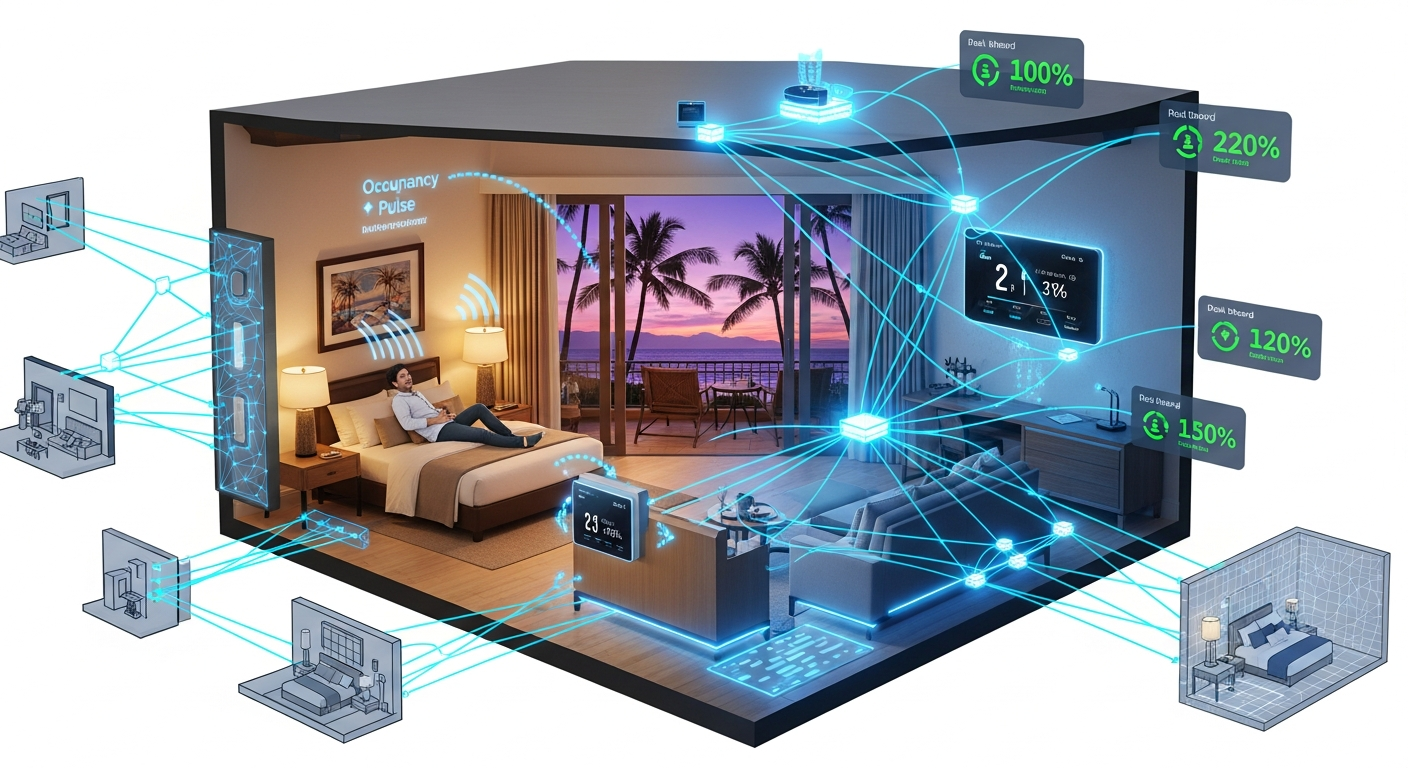
IoT (Internet of Things) facility automation connects your building's systems—HVAC, lighting, water management, and more—through a network of smart sensors and controllers. These devices communicate with each other and with a central management platform, enabling real-time monitoring and intelligent decision-making without constant human intervention.
Think of it as giving your building a nervous system and brain. Sensors act as nerves, detecting conditions like temperature, humidity, occupancy, and light levels. The control system acts as the brain, processing this information and making adjustments automatically. The result? Your facility responds dynamically to actual conditions rather than operating on rigid, wasteful schedules.
For Hawaii businesses, this means your systems can account for our unique climate variations—the difference between windward and leeward conditions, morning trade wind patterns, and afternoon solar heat gain—all while adapting to real-time occupancy and usage patterns.
How IoT Automation Cuts Energy Costs
The energy savings from IoT automation come from several key capabilities that traditional systems simply cannot match.
Occupancy-Based Climate Control
Smart occupancy sensors detect when spaces are actually in use. Imagine a Waikiki hotel where guest rooms automatically adjust to energy-saving mode when unoccupied, then pre-cool to optimal comfort levels before guests return. Conference rooms condition themselves based on scheduled events and actual attendance rather than running full-blast all day. This single feature alone could reduce HVAC energy consumption by 20-30% in typical hospitality settings.
Predictive Temperature Management
IoT systems learn your facility's thermal characteristics and can predict how long it takes to reach desired temperatures. Rather than over-cooling spaces "just in case," the system calculates exactly when to begin conditioning based on outside temperature, solar load, and scheduled occupancy. This precision eliminates the energy waste of excessive pre-cooling while ensuring spaces reach perfect comfort exactly when needed.
Zone-Based Optimization
Different areas of your facility have different needs. Ocean-facing rooms receive more afternoon sun than mountain-facing ones. First-floor spaces have different cooling requirements than upper floors. IoT automation creates micro-zones throughout your property, each managed independently based on its specific conditions. This granular control prevents the common problem of over-conditioning some areas to compensate for under-conditioned others.
Peak Demand Management
Hawaii utilities often charge premium rates during peak demand periods. Smart facility systems can automatically reduce non-critical loads during these expensive windows—slightly adjusting temperatures in unoccupied areas, staggering equipment startup times, and prioritizing energy use where it matters most. Many businesses could reduce demand charges by 15-25% through intelligent load management alone.
Improving Guest Comfort Through Automation
Here's where IoT automation truly shines: the same systems that reduce energy costs actually enhance comfort rather than compromising it.
Personalized Environmental Control
Modern IoT systems enable guests to set their preferred conditions through room tablets or mobile apps. The system remembers these preferences for return visits, automatically adjusting rooms before arrival. Unlike traditional thermostats with their confusing interfaces and delayed responses, smart controls provide intuitive, responsive environmental management that guests actually appreciate.
Consistent Comfort Across Properties
IoT systems eliminate the common complaint of temperature inconsistency. Every space maintains its target conditions precisely because sensors continuously monitor actual conditions and make micro-adjustments. No more rooms that are too cold in the morning and too warm by afternoon. No more hot spots near windows or cold zones near doors.
Proactive Maintenance
Smart sensors detect equipment issues before they cause comfort problems. When an HVAC unit begins showing performance degradation, the system alerts maintenance staff immediately. This prevents the scenario where guests complain about a malfunctioning air conditioner that's been struggling for days. Proactive maintenance also extends equipment life and prevents costly emergency repairs.
Real-World Applications for Hawaii Businesses
Different types of Hawaii businesses benefit from IoT facility automation in specific ways.
Hotels and Resorts
Hospitality properties typically see the most dramatic results. Consider how a resort could implement occupancy-based room conditioning, automated pool equipment management based on usage patterns, and intelligent lighting that adjusts to natural daylight availability. The combination of reduced energy consumption and enhanced guest experience creates both immediate cost savings and improved reviews that drive future bookings.
Retail Spaces
Retail businesses often maintain consistent climate control during business hours regardless of customer traffic. IoT automation could adjust conditions based on actual foot traffic—detected through door sensors and occupancy monitoring—while ensuring the shopping environment remains comfortable. This is particularly valuable for Hawaii retailers dealing with the constant challenge of open storefronts and outdoor-to-indoor transitions.
Office Buildings
Commercial office spaces waste enormous energy on nights, weekends, and in conference rooms that sit empty most of the day. Automated systems could condition spaces based on calendar schedules and actual occupancy, potentially reducing energy use by 30-40% while ensuring employees always work in comfortable conditions.
Integration With Existing Systems
One concern many Hawaii business owners raise is whether IoT automation requires completely replacing existing equipment. The answer is usually no. Modern IoT systems excel at integrating with existing infrastructure through professional system integration services.
Smart controllers can interface with most existing HVAC systems, adding intelligence without requiring equipment replacement. Wireless sensors install without extensive rewiring. Cloud-based management platforms connect to existing building management systems through standard protocols. This means you can implement IoT automation incrementally, starting with high-impact areas and expanding over time as you see results.
The key is working with experienced integrators who understand both the technology and Hawaii's unique requirements. Proper integration ensures all systems communicate effectively, data flows correctly, and you gain unified visibility across your entire facility.
Data-Driven Insights for Continuous Improvement
Beyond immediate energy savings and comfort improvements, IoT facility automation provides something equally valuable: actionable data about your property's performance.
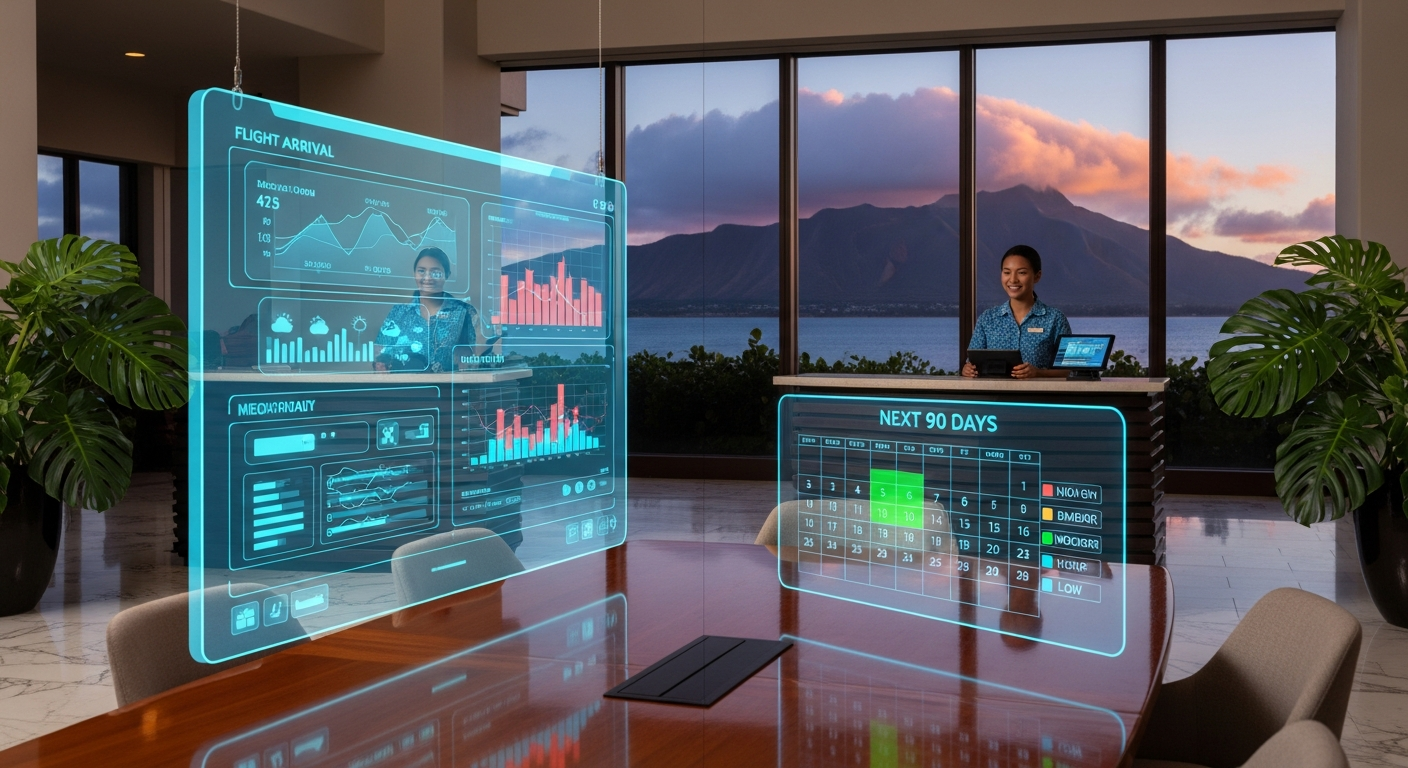
Your system continuously collects information about energy consumption patterns, equipment performance, space utilization, and environmental conditions. This data reveals opportunities you might never have identified otherwise. You might discover that certain spaces remain consistently unoccupied during specific hours, suggesting schedule adjustments. Equipment performance trends might indicate maintenance needs before failures occur. Energy consumption patterns might reveal that certain operational practices waste resources unnecessarily.
This intelligence enables continuous optimization. You're not just setting up automation and walking away—you're gaining ongoing insights that inform better decisions about space usage, equipment upgrades, and operational practices.
Overcoming Implementation Challenges
While IoT facility automation offers compelling benefits, successful implementation requires addressing several common challenges.
Network Infrastructure
IoT devices need reliable network connectivity. Many Hawaii properties, particularly older buildings, may need network upgrades to support dense sensor deployments. However, modern wireless protocols like LoRaWAN enable long-range, low-power connectivity that often works with minimal infrastructure investment.
Change Management
Staff and guests need to understand and trust automated systems. Clear communication about how automation works, what it's designed to achieve, and how people can interact with it prevents resistance and confusion. Training maintenance staff to work with smart systems ensures they can respond effectively when issues arise.
Cybersecurity
Connected systems require robust security measures. IoT facility networks should be segmented from guest and business networks, devices should use strong authentication, and systems should receive regular security updates. Working with experienced technology consultants ensures your automation infrastructure remains secure.
Getting Started With IoT Facility Automation
If you're ready to explore how IoT automation could benefit your Hawaii business, start with these steps:
First, conduct an energy audit. Understand your current consumption patterns and identify the biggest opportunities for improvement. HVAC typically offers the largest potential savings, but lighting, water heating, and other systems may also warrant attention.
Second, define your goals. Are you primarily focused on reducing costs, improving comfort, extending equipment life, or all three? Clear objectives help guide technology selection and implementation priorities.
Third, assess your existing infrastructure. What equipment do you currently have? What's its condition and remaining useful life? Understanding your starting point helps determine whether to integrate with existing systems or plan for strategic upgrades.
Finally, partner with experienced integrators. IoT facility automation succeeds when technology, business objectives, and operational realities align properly. Working with consultants who understand both the technology and Hawaii's specific challenges ensures successful implementation.
Ready to Transform Your Facility Management?
IoT-enabled facility automation isn't just about installing smart devices—it's about fundamentally transforming how your Hawaii business manages energy, comfort, and operational efficiency. The technology has matured to the point where implementation is straightforward, costs are reasonable, and results are measurable.
Whether you operate a hotel, retail space, office building, or other commercial property, the combination of Hawaii's high energy costs and IoT automation's proven capabilities creates a compelling opportunity. You can reduce operating expenses while simultaneously improving the experience you provide to guests, customers, and employees.
Want to explore how IoT facility automation could work for your specific situation? Contact LeniLani Consulting to discuss your facility management challenges and discover customized solutions that align with your business objectives. Our team specializes in system integration and automation for Hawaii businesses, and we'd be happy to help you understand the potential benefits and implementation path for your property.
Conclusion
The question isn't whether IoT facility automation can reduce costs while improving comfort—the technology's track record proves it can. The real question is how quickly you want to start capturing these benefits for your Hawaii business. With energy costs showing no signs of decreasing and guest expectations continuing to rise, the case for smart facility management grows stronger every day.
By embracing IoT automation now, you position your business to operate more efficiently, compete more effectively, and deliver better experiences—all while reducing your environmental impact and operating costs. That's a combination that benefits everyone: your business, your guests, and Hawaii's energy future.