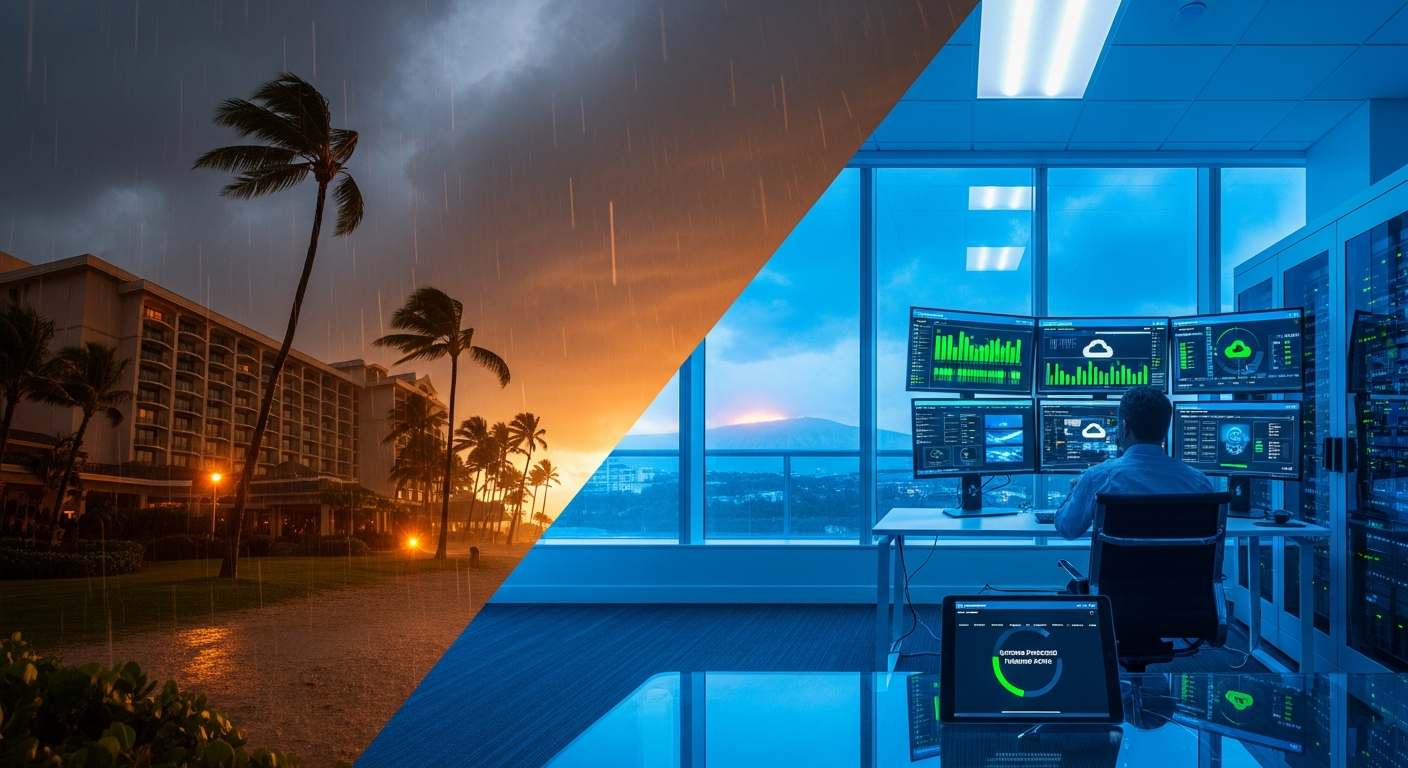

When was the last time you thought about what would happen to your business if a hurricane knocked out power for a week? Or if a tsunami warning forced an immediate evacuation of your offices? For Hawaii businesses, these aren't hypothetical scenarios—they're real risks that demand serious preparation.
The islands' geographic isolation, vulnerability to natural disasters, and dependence on aging infrastructure create unique challenges for business continuity. Traditional disaster recovery solutions often fall short in our island environment, where physical backup locations may face the same risks as primary facilities. That's where Disaster Recovery as a Service (DRaaS) becomes not just useful, but essential for Hawaii businesses.
Understanding the Unique Risks Hawaii Businesses Face
Hawaii's business environment presents challenges you won't find on the mainland. Our island geography means that natural disasters can impact entire regions simultaneously, making traditional backup strategies less effective. When Hurricane Lane threatened the islands in 2018, businesses across multiple islands faced potential closure. A backup server in Hilo doesn't help much when the entire Big Island loses power.
Beyond hurricanes and tsunamis, Hawaii businesses must contend with volcanic activity, flooding, and infrastructure vulnerabilities. Our power grid, telecommunications networks, and internet connectivity all depend on systems that can be disrupted by natural events. Add to this the challenge of shipping delays for replacement hardware—a problem that can extend downtime from days to weeks—and you begin to see why cloud-based disaster recovery solutions have become critical for island businesses.
According to recent reports from TechCrunch, Disaster Recovery as a Service adoption has surged following recent climate events, with businesses recognizing that traditional approaches no longer provide adequate protection in an era of increasing climate volatility.
What Is Disaster Recovery as a Service?
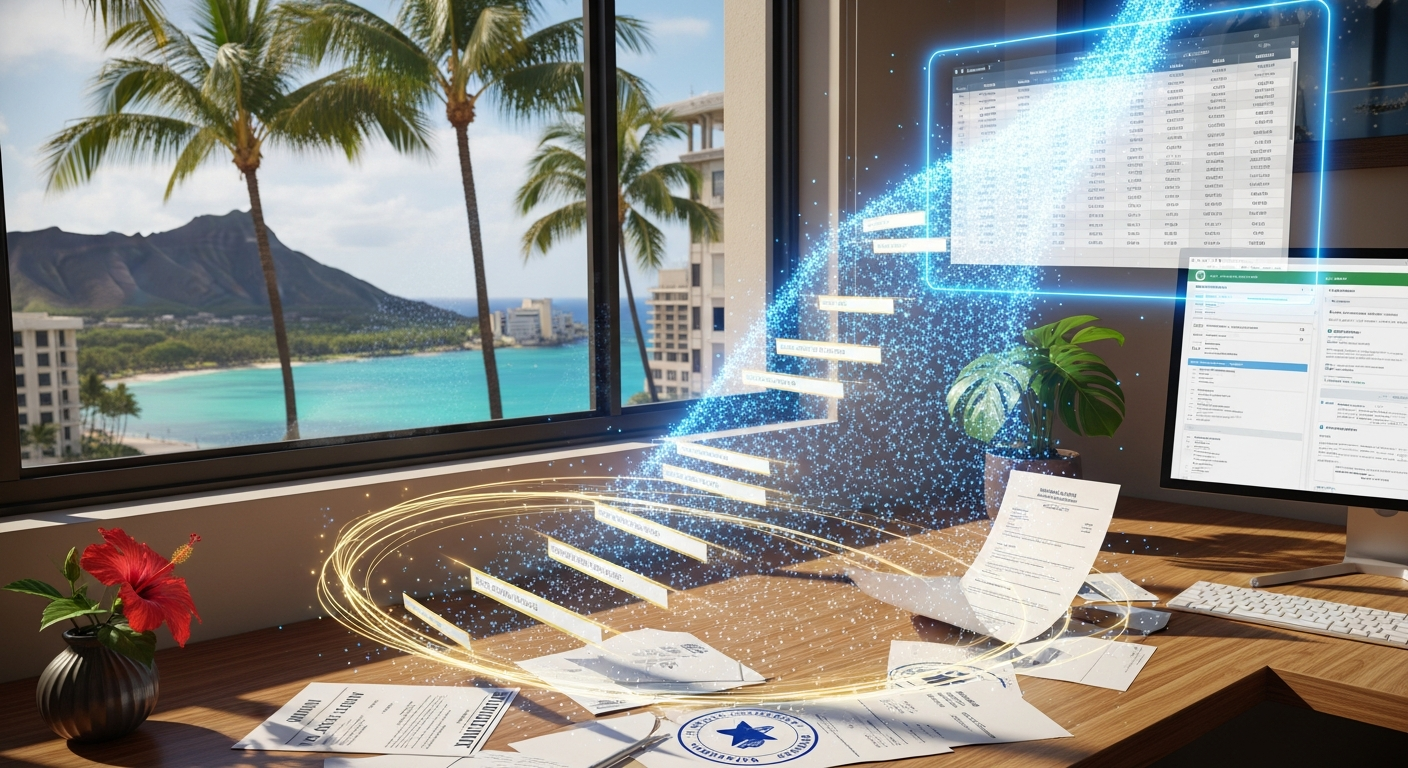
Disaster Recovery as a Service (DRaaS) is a cloud-based solution that replicates your critical business systems and data to secure, geographically distant data centers. Unlike traditional disaster recovery, which requires you to maintain expensive backup hardware and facilities, DRaaS leverages cloud infrastructure to provide enterprise-level protection at a fraction of the cost.
Think of DRaaS as insurance for your digital operations. Your data, applications, and systems are continuously backed up to the cloud. If disaster strikes your physical location, you can quickly restore operations from the cloud, allowing your team to work from anywhere with internet access. For Hawaii businesses, this means your backup systems aren't sitting in a building down the street that might face the same hurricane—they're in secure mainland data centers designed for maximum uptime.
The service typically includes automated backups, regular testing of recovery procedures, and defined recovery time objectives (RTOs) and recovery point objectives (RPOs). This means you know exactly how quickly you can get back online and how much data you might lose in a worst-case scenario.
How DRaaS Protects Against Hawaii's Specific Threats
Hurricane and Severe Weather Protection
\p>When a hurricane approaches, you need to focus on protecting your people and physical assets—not scrambling to back up servers. With DRaaS, your systems are already protected. Consider how a Honolulu-based accounting firm could maintain operations during hurricane season: while their office might be shuttered, their team could access client files and critical applications from home or temporary locations, ensuring tax deadlines are met and client service continues uninterrupted.Tsunami and Evacuation Scenarios
Tsunami warnings require immediate action, leaving no time for data backup procedures. DRaaS provides continuous protection, so when evacuation orders come, you can leave immediately knowing your business data is safe. A coastal retail operation, for example, wouldn't lose transaction histories, inventory records, or customer data even if their physical location suffered damage.
Infrastructure Failures
Power outages, internet disruptions, and telecommunications failures happen more frequently in Hawaii than on the mainland. DRaaS ensures that even when local infrastructure fails, your data remains accessible. Your team can continue working using mobile hotspots or alternative internet connections to access cloud-based systems that aren't dependent on local infrastructure.
Hardware Failures and Shipping Delays
When a server fails on the mainland, replacement parts might arrive the next day. In Hawaii, that same part could take a week or more to ship. DRaaS eliminates this vulnerability by removing dependence on local hardware. If your server fails, you simply fail over to your cloud-based backup and continue operations while you arrange for repairs or replacements on your own timeline.
The Business Case for DRaaS in Hawaii
Many Hawaii business owners hesitate to invest in disaster recovery, viewing it as an expensive insurance policy they hope never to use. However, DRaaS changes this calculation significantly. The cost of downtime—lost revenue, damaged reputation, and potentially lost customers—typically far exceeds the investment in DRaaS.
Imagine a tour operator whose booking system goes down during peak season. Every hour of downtime means lost bookings, frustrated customers, and damage to your reputation that can take months to repair. Or consider a medical practice that loses access to patient records. Beyond the operational disruption, you face potential HIPAA compliance issues and liability concerns.
DRaaS provides predictable monthly costs without the capital expense of maintaining backup facilities and hardware. You're essentially converting a large, unpredictable risk into a manageable, budgetable expense. For many Hawaii businesses, this makes enterprise-level disaster recovery accessible for the first time.
Ready to protect your business from Hawaii's unique risks? Contact LeniLani Consulting to discuss how DRaaS can safeguard your operations.
Implementing DRaaS: What Hawaii Businesses Need to Know
Assessing Your Recovery Requirements
Not all business functions are equally critical. Start by identifying which systems and data are essential for operations. Your point-of-sale system and customer database might need to be back online within hours, while your archived email might tolerate longer recovery times. This assessment helps you design a cost-effective DRaaS solution that prioritizes your most critical needs.
Choosing the Right Service Level
DRaaS providers offer different service levels with varying RTOs and RPOs. A near-instant recovery might be essential for an e-commerce business, while a professional services firm might tolerate a few hours of downtime. Understanding your tolerance for downtime and data loss helps you select the appropriate—and most cost-effective—service level.
Integration with Existing Systems
Modern DRaaS solutions integrate with virtually any business system, from custom applications to standard business software. The key is working with a provider who understands your specific technology environment and can design a solution that protects all your critical systems without creating operational complexity.
Testing and Validation
A disaster recovery plan that hasn't been tested is just a theory. Regular testing ensures your DRaaS solution will work when you need it. This includes not just technical testing but also ensuring your team knows how to access systems and continue operations during a disaster. Many Hawaii businesses schedule annual disaster recovery drills, treating them like fire drills for their digital operations.
DRaaS and Cloud Migration: A Natural Partnership
For businesses considering cloud migration, DRaaS often serves as an excellent first step. Moving disaster recovery to the cloud lets you experience cloud benefits—scalability, reliability, reduced hardware dependence—without the complexity of migrating your entire operation immediately.
This phased approach allows your team to become comfortable with cloud technologies while providing immediate protection for your business. Many Hawaii businesses start with DRaaS and then gradually migrate additional systems to the cloud as they see the benefits firsthand. The result is a comprehensive cloud strategy that evolved naturally from an initial focus on disaster recovery.
Cloud infrastructure provides the foundation for modern disaster recovery, offering redundancy and geographic distribution that would be prohibitively expensive to build independently. By leveraging cloud services, even small Hawaii businesses can access enterprise-level disaster recovery capabilities that were previously available only to large corporations with massive IT budgets.
Real-World Considerations for Hawaii Implementation
Bandwidth and Connectivity
Hawaii's internet connectivity has improved dramatically in recent years, but bandwidth considerations remain important for DRaaS implementation. The initial backup of your systems requires uploading potentially large amounts of data, which can take time on slower connections. However, once the initial backup is complete, ongoing replication typically requires minimal bandwidth since only changes are transmitted.
Compliance and Data Sovereignty
Some Hawaii businesses must comply with specific regulations regarding data storage and protection. Healthcare providers need HIPAA compliance, financial institutions have their own requirements, and government contractors may face data sovereignty restrictions. Quality DRaaS providers offer solutions that meet these requirements, including options for data encryption, specific geographic storage locations, and compliance certifications.
Cost Management
DRaaS pricing typically includes storage costs, computing resources for recovery, and data transfer fees. Understanding these components helps you manage costs effectively. For example, retaining years of historical backups might be unnecessary for some data types, and adjusting retention policies can significantly reduce storage costs without compromising protection for critical information.
Making the Decision: Is DRaaS Right for Your Business?
If your business depends on digital systems—and in 2025, what business doesn't?—then disaster recovery planning isn't optional. The question isn't whether you need disaster recovery, but rather what approach best fits your needs and budget.
DRaaS makes sense for Hawaii businesses that want enterprise-level protection without enterprise-level costs, that need flexibility to scale protection as they grow, and that recognize the unique vulnerability of island-based operations. It's particularly valuable for businesses that can't afford extended downtime, that handle sensitive customer data, or that face regulatory compliance requirements.
Consider whether your current backup strategy—if you have one—would actually protect you in a real disaster. If your backup drives sit in the same building as your servers, would they survive a hurricane? If you rely on manual backup procedures, would they happen during a crisis when your team is focused on immediate safety concerns? If your answer to these questions raises concerns, DRaaS deserves serious consideration.
The technology consulting team at LeniLani Consulting specializes in helping Hawaii businesses implement cloud-based disaster recovery solutions tailored to island operations and risks.
Taking the First Step
Implementing DRaaS doesn't have to be overwhelming. Start by documenting your critical systems and data, understanding your tolerance for downtime and data loss, and identifying your budget parameters. This groundwork allows you to have productive conversations with DRaaS providers and ensures you implement a solution that truly meets your needs.
Many Hawaii businesses begin with a pilot program, protecting their most critical systems first and expanding coverage as they see results. This approach provides immediate protection for your most important operations while allowing you to refine your disaster recovery strategy based on real-world experience.
The investment in DRaaS pays dividends not just during disasters, but in daily operations. Knowing your data is protected provides peace of mind that lets you focus on growing your business rather than worrying about what might happen if disaster strikes. In Hawaii's dynamic environment, that peace of mind is invaluable.
Protect Your Hawaii Business Today
Don't wait for disaster to strike. LeniLani Consulting helps Hawaii businesses implement comprehensive DRaaS solutions that protect against natural disasters, infrastructure failures, and unexpected disruptions. Our team understands the unique challenges of island operations and designs disaster recovery strategies that keep your business running no matter what Hawaii's environment throws at you.
Schedule a consultation today to learn how DRaaS can safeguard your operations and give you peace of mind in paradise.
Conclusion
Hawaii's unique geography and vulnerability to natural disasters make disaster recovery planning essential for business continuity. Traditional approaches often fall short in our island environment, where backup facilities may face the same risks as primary operations and hardware replacement can take weeks.
Disaster Recovery as a Service provides Hawaii businesses with enterprise-level protection through cloud infrastructure, eliminating dependence on local hardware and ensuring operations can continue even when physical facilities are impacted. The combination of predictable costs, rapid recovery capabilities, and protection against Hawaii-specific risks makes DRaaS an increasingly essential investment for island businesses.
As climate events become more frequent and severe, the question isn't whether your business will face a disaster, but whether you'll be prepared when it happens. DRaaS ensures the answer is yes, protecting not just your data, but your reputation, customer relationships, and business continuity in the face of whatever challenges Hawaii's environment presents.